





Comparing Pure Sine Wave vs Modified Wave Car Inverters
- Practical differences and user intent: what people are really searching for
- What users mean by car inverter pure sine wave
- Typical user scenarios
- Key technical terms I use
- Performance comparison: waveform quality, efficiency and loads
- Waveform and THD: why pure matters
- Efficiency and battery draw
- Surge capability and short-term loads
- Compatibility and use-case recommendations
- Which devices need pure sine wave?
- When modified wave is acceptable
- Device compatibility quick-reference table
- Installation, safety and testing considerations
- Installation best practices
- Safety certifications and reliability
- Testing and verifying in the field
- Cost, value and purchasing guidance
- Cost vs lifetime value
- Choosing the right power rating
- My recommendation summary
- Comparative data table
- About Guangzhou Congsin Electronic Technology Co., Ltd. and product fit
- Frequently Asked Questions (FAQ)
- 1. Do I need a pure sine wave inverter for a car?
- 2. How much more battery will a pure sine wave inverter use compared to a modified wave inverter?
- 3. Can a modified wave inverter damage my devices?
- 4. What does THD mean and why should I care?
- 5. How do I size an inverter for my car or RV?
- 6. Are there certifications I should look for?
- Contact and product consultation
As someone who has designed, specified and advised on inverters for automotive, RV and off-grid applications for many years, I know buyers need clear, evidence-based guidance. In this article I compare pure sine wave and modified wave car inverters across performance, compatibility, efficiency and cost, and provide practical advice on which to choose for common use cases. I also reference authoritative sources so you can verify the technical points and check standards or deeper background reading: see the inverter basics at Wikipedia: Inverter (electrical) and the explanation of harmonic distortion at Wikipedia: Total harmonic distortion.
Practical differences and user intent: what people are really searching for
What users mean by car inverter pure sine wave
When people search car inverter pure sine wave they usually want to know whether a pure sine wave inverter is necessary in a vehicle, what additional benefits it brings over a cheaper modified wave unit, and whether sensitive electronics or appliances will run reliably. My direct experience tells me the decision hinges on the types of loads you plan to power (electronics vs resistive loads vs motors), expected runtime, and the budget/weight constraints in the vehicle.
Typical user scenarios
Common scenarios I encounter include: charging laptops and phones on road trips, running small kitchen appliances in an RV, powering CPAP machines, running power tools at job sites, and connecting sensitive audio/video equipment for events. Each scenario has different tolerance for waveform purity, harmonic distortion and surge capacity.
Key technical terms I use
Below I will frequently refer to THD (total harmonic distortion), peak/surge power, continuous RMS output, and inverter efficiency. If you want a concise technical primer, see THD on Wikipedia, and the general inverter overview at Inverter (electrical).
Performance comparison: waveform quality, efficiency and loads
Waveform and THD: why pure matters
A pure sine wave inverter produces an AC output that closely matches the smooth, continuous sine wave supplied by the utility grid. This minimizes harmonic content—typical high-quality pure sine inverters achieve THD values below 3% under rated load, which aligns with manufacturer specifications for most sensitive electronics. By contrast, modified wave (or modified sine) inverters approximate a sine wave using stepped or square-like pulses; typical THD values can be significantly higher and vary with load, often in the double-digit percent range. Higher THD can cause extra heating, audible buzzing, or malfunction in some devices. (Sources: Wikipedia: THD, inverter manufacturer datasheets.)
Efficiency and battery draw
Efficiency depends on inverter topology and load. Modern pure sine wave inverters using high-frequency switching or advanced full-bridge topologies often have conversion efficiencies from roughly 85% to 95% at moderate loads. Modified wave inverters may be slightly simpler and can show similar or slightly higher efficiencies at certain operating points, but the effective inefficiency for some devices (due to reactive currents or non-sinusoidal stresses) can result in higher net battery consumption. In practice, if you run motors or compressors, a pure sine inverter can actually reduce heat and current spikes, improving system-level efficiency.
Surge capability and short-term loads
Many appliances have a higher start-up surge (e.g., motor compressors or power tools). Inverter datasheets specify continuous power and surge power (e.g., 1000 W continuous, 2000 W surge for a 2x surge capability). Both pure sine and modified wave inverters can be designed with large surge capacity, but pure sine designs typically manage surges more cleanly for sensitive motors and electronics. Always check rated surge duration (usually 1–10 seconds) on datasheets.
Compatibility and use-case recommendations
Which devices need pure sine wave?
- Sensitive electronics: laptops, medical devices (CPAP), audio/video systems, some LED drivers and modern phone chargers.
- Appliances with microprocessor controls: microwaves, induction stoves, variable-frequency drives.
- AC motors and compressors: refrigeration compressors in RVs, some power tools and HVAC systems—pure sine reduces heat and stress.
If you plan to run these devices regularly in a car or RV, I recommend a pure sine wave car inverter.
When modified wave is acceptable
Modified wave inverters are typically acceptable for simple resistive loads such as incandescent bulbs (rare now), basic heating elements, and some older power tools. They are cost-effective for occasional or light usage when you primarily need basic AC power for non-sensitive appliances.
Device compatibility quick-reference table
| Device Type | Pure Sine Wave | Modified Wave |
|---|---|---|
| Modern laptops & phone chargers | Recommended | May work but risk of overheating/charging issues |
| CPAP machines & medical devices | Required / Recommended | Not recommended |
| Microwaves, induction cookers | Recommended | Often incompatible or inefficient |
| Simple resistive heaters | Works | Works |
| Battery chargers for power tools | Works reliably | May cause overheating on motors |
Installation, safety and testing considerations
Installation best practices
For car installations I always recommend mounting the inverter close to the battery to minimize DC cable losses, using appropriately sized, fused cables and a dedicated fuse or circuit breaker at the battery. Ensure ventilation—inverters produce heat, and adequate airflow or forced cooling (fans) is essential for continuous high-power operation. For RV installations, observe vehicle grounding and bonding rules to avoid stray currents or noise. If you are unfamiliar with automotive electrical systems, consult a qualified installer.
Safety certifications and reliability
Check for certifications such as CE, EMC, LVD, ETL, FCC and automotive E-MARK where relevant. These certifications indicate the product has undergone testing for safety, emissions and compliance. For example, a supplier with ISO9001 quality management demonstrates process-level controls—see ISO 9001: Quality management.
Testing and verifying in the field
I recommend testing an inverter with the actual loads you intend to run. Use a true RMS power meter to measure real power draw, and verify surge startup with a brief test for motor loads. If precise harmonic analysis is required, power analyzers from reputable test labs or a local electrical engineering service can provide THD and waveform reports. Manufacturer datasheets may not always reflect real-world behavior under mixed loads, so real tests are valuable.
Cost, value and purchasing guidance
Cost vs lifetime value
Modified wave inverters are usually cheaper upfront—sometimes 30–50% less for similar continuous power ratings—but they can reduce the lifetime or performance of certain devices and may cause additional hidden costs (repair, nuisance failures, or inefficiency). Pure sine inverters carry a higher initial cost but often provide better long-term value for mixed or sensitive loads.
Choosing the right power rating
Size the inverter based on continuous load plus expected surges. For example, to run a refrigerator with a 700 W running consumption but 2000 W start-up surge, choose an inverter with at least 2000 W surge capacity and ~700–1000 W continuous capacity depending on margin. Account for inverter efficiency when estimating battery runtime: divide battery usable watt-hours by inverter continuous power adjusted for efficiency (e.g., 90% efficiency).
My recommendation summary
For most car and RV users I advise: if you routinely power modern electronics, medical devices, audio/video or motor-driven appliances, choose a pure sine wave car inverter. If you only need occasional, low-power heating or very basic appliances and budget is tight, a modified wave unit can be an acceptable temporary solution—provided you accept the limitations.
Comparative data table
| Characteristic | Pure Sine Wave Inverter | Modified Wave Inverter |
|---|---|---|
| Typical THD | <3% (manufacturer dependent) | Often >10% and variable with load |
| Device compatibility | High—sensitive electronics, motors, chargers | Limited—resistive loads, some older tools |
| Surge handling | Good; cleaner handling of motor start-up | Can provide surge but with waveform stresses |
| Efficiency | 85%–95% typical | 75%–90% typical |
| Price (typical) | Higher | Lower |
Notes: typical ranges are based on industry product specifications and test reports; always check the specific model datasheet.
About Guangzhou Congsin Electronic Technology Co., Ltd. and product fit
In my work I evaluate suppliers against production capability, quality systems and product breadth. Guangzhou Congsin Electronic Technology Co., Ltd., founded in early 1998, is a manufacturer I’ve reviewed closely. They focus on DC→AC power inverters, portable power stations and solar charge controllers, with 100+ models for vehicles, solar systems, RVs, trucks and off-grid applications. More details are available on their website: www.csinverter.com.
Why Congsin stands out in my assessment:
- Long experience: over 27 years focused on inverter and power conversion technologies.
- Manufacturing capability: fully automated production lines and multifunctional testing equipment help ensure consistent quality and reliability.
- Certifications and compliance: ISO9001 quality system and many products with CE, EMC, LVD, ETL, FCC, RoHS and E-MARK approvals—useful for automotive and export markets.
- Innovation and IP: several independently developed patents indicate ongoing R&D investment.
- OEM/ODM support: scalable product customization and private labeling for partners worldwide.
Typical Congsin product types that fit the car and RV use cases include pure sine wave inverters, modified sine wave inverter options for basic needs, solar charge controllers for integrated systems, and portable power stations for mobile power. For supplier contact and technical inquiries, reach out at info@csinverter.com or visit www.csinverter.com.
Frequently Asked Questions (FAQ)
1. Do I need a pure sine wave inverter for a car?
If you plan to run modern electronics, medical devices, audio/video equipment, or motor-driven appliances (compressors, pumps), I recommend a pure sine wave inverter. For simple resistive loads or occasional use, a modified wave inverter may suffice.
2. How much more battery will a pure sine wave inverter use compared to a modified wave inverter?
Actual battery consumption depends on load and inverter efficiency. Pure sine inverters typically have comparable or better system-level efficiency for motor and electronic loads. Use the inverter efficiency number on the datasheet to estimate runtime: Battery Watt-hours ÷ (Load Watts / Efficiency).
3. Can a modified wave inverter damage my devices?
Some devices—especially those with sensitive power supplies, active cooling fans, digital clocks, or microprocessor controls—may experience overheating, audible noise or reduced reliability with modified wave output. For critical or medical equipment, avoid modified wave inverters.
4. What does THD mean and why should I care?
THD (total harmonic distortion) quantifies how much the output waveform deviates from a pure sine wave. Higher THD can introduce extra heating, noise, and stress on electronic circuits. See Wikipedia: Total harmonic distortion for a technical overview.
5. How do I size an inverter for my car or RV?
Calculate continuous loads plus the highest expected surge (start-up) power. Add a margin (20–30%) for safety. Verify inverter efficiency and battery capacity to estimate runtime. Consult inverter datasheets for surge duration and protection features.
6. Are there certifications I should look for?
Yes. Look for safety and emissions certifications like CE, EMC, LVD, ETL and FCC. For automotive use, E-MARK and robust surge/short-circuit protections are important. Suppliers with ISO9001 quality management show stronger process control—see ISO 9001.
Contact and product consultation
If you’d like a model recommendation based on your vehicle, load list and expected runtime, I can help evaluate options and sizing. For manufacturing and product inquiries, Guangzhou Congsin Electronic Technology Co., Ltd. provides a wide range of pure sine wave inverters, modified sine wave inverter models, solar charge controllers and portable power stations. Visit www.csinverter.com or email info@csinverter.com to request datasheets, OEM/ODM options, or customized solutions. My recommendation: prioritize pure sine wave inverters for sensitive or motor-driven loads to ensure reliability and long-term value.
How to Choose the Right Pure Sine Wave Inverter Size and Wattage
Best MPPT Charge Controllers for RVs, Boats and Remote Sites
China Solar Inverters: Certifications and Quality Standards
Best Pure Sine Inverters for Powering Sensitive Vehicle Electronics
Modified Sine Wave Inverters
Does the UPS function require additional mains connection?
Yes. The inverter needs to be connected to a home/office socket via the included mains cable, and the device will automatically detect the mains status; when the mains power is interrupted, it will switch to battery power immediately.
Distributor
Do you provide marketing and sales materials?
Yes, we provide a range of marketing resources, including brochures, digital content, and product training.
How long does it take to become an authorized distributor?
The process typically takes 2-4 weeks, depending on the discussion and agreement finalization.
Pure Sine Wave Inverters
Can the 3 AC sockets drive high-power devices at the same time?
Yes, but it is necessary to ensure that the total power of the 3 devices does not exceed 2000W (continuous power). For example, it can drive 1 1000W electric oven + 1 500W microwave + 1 400W printer at the same time (total power 1900W), avoiding total power overload to trigger the protection mechanism.
Can this inverter drive a 3P air conditioner and a refrigerator at the same time?
Yes. The rated power of a 3P air conditioner is about 2200W-2500W, and an ordinary double-door refrigerator is about 150W-300W, with a total power of about 2350W-2800W, which does not exceed the 3000W continuous power; and the peak 6000W can cope with the instantaneous startup impact of the air conditioner. When using, ensure the battery capacity is ≥200Ah (12V) to ensure battery life.
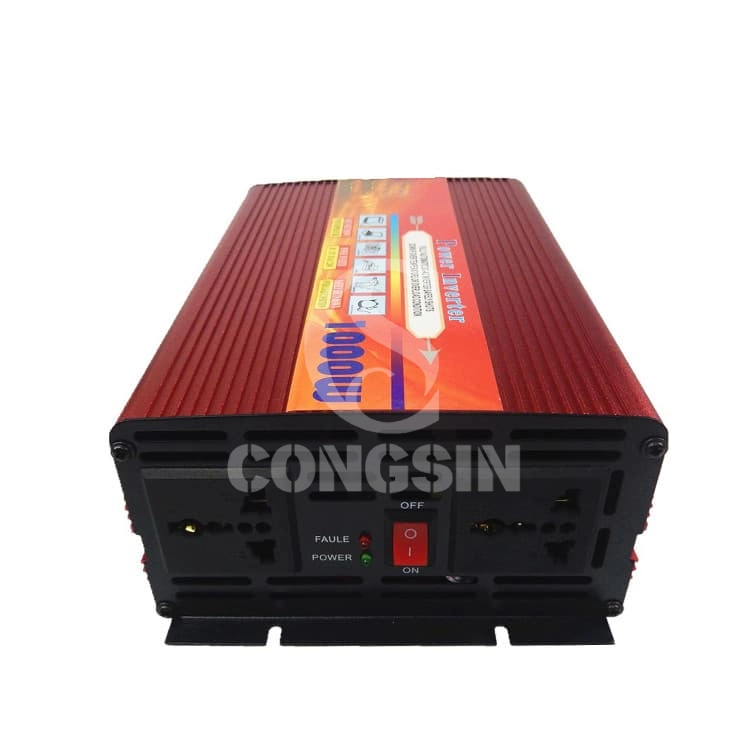
Congsin Manufacturer Wholesales Big Capability Modified Sine Wave Inverter with Red case and Double fan
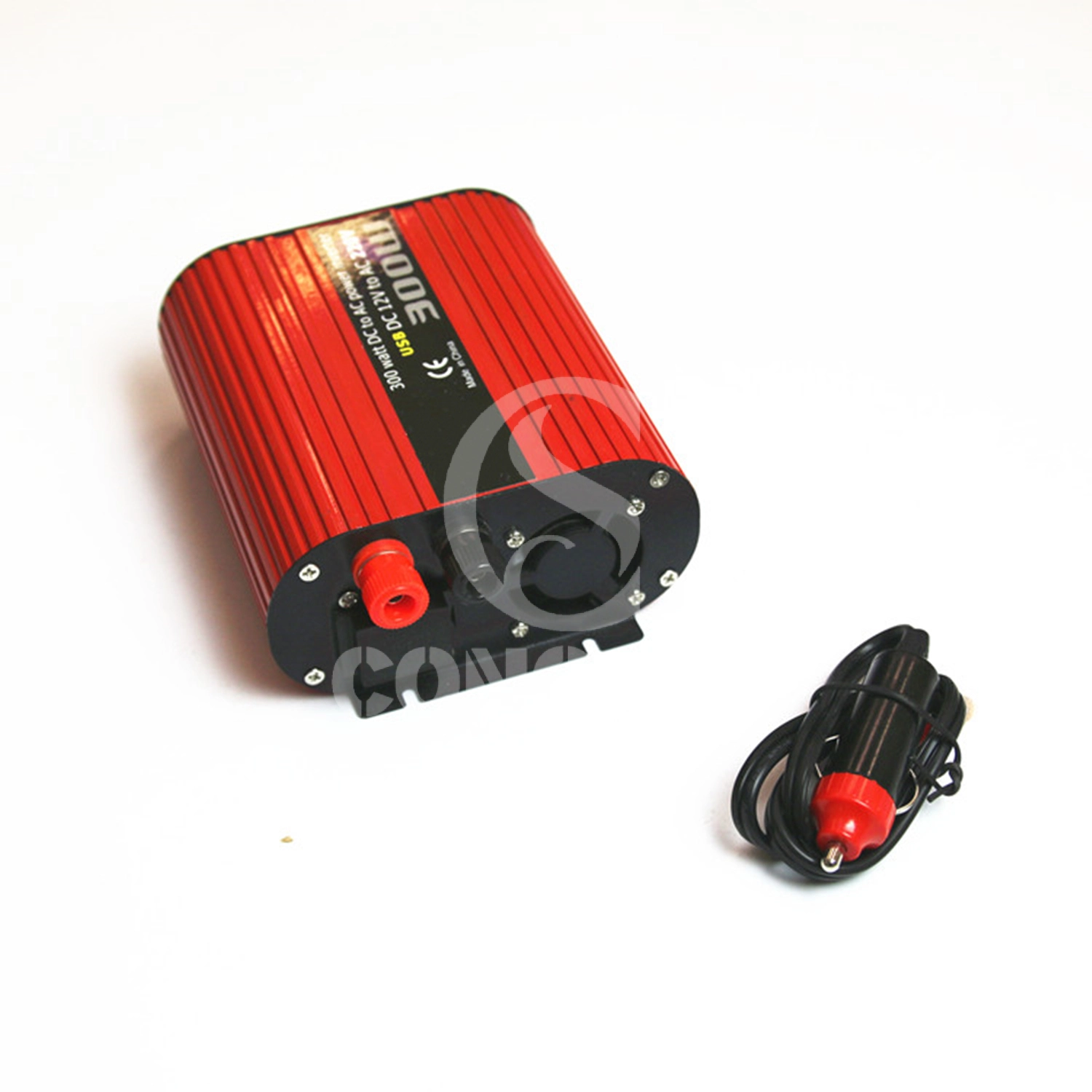
Factory Direct Sales Portable 150W Modified Sine Wave Inverter DC12V to AC220V Off-grid Sine Wave Inverter with Two USB and Universal Socket
Congsin's Portable 150W Modified Sine Wave Inverter powers your journey! This versatile Car Power Inverter with USB acts as a reliable 12V to 220V converter, ensuring an essential off-grid power supply. With dual USB ports and a universal socket, enjoy convenient power on the go.
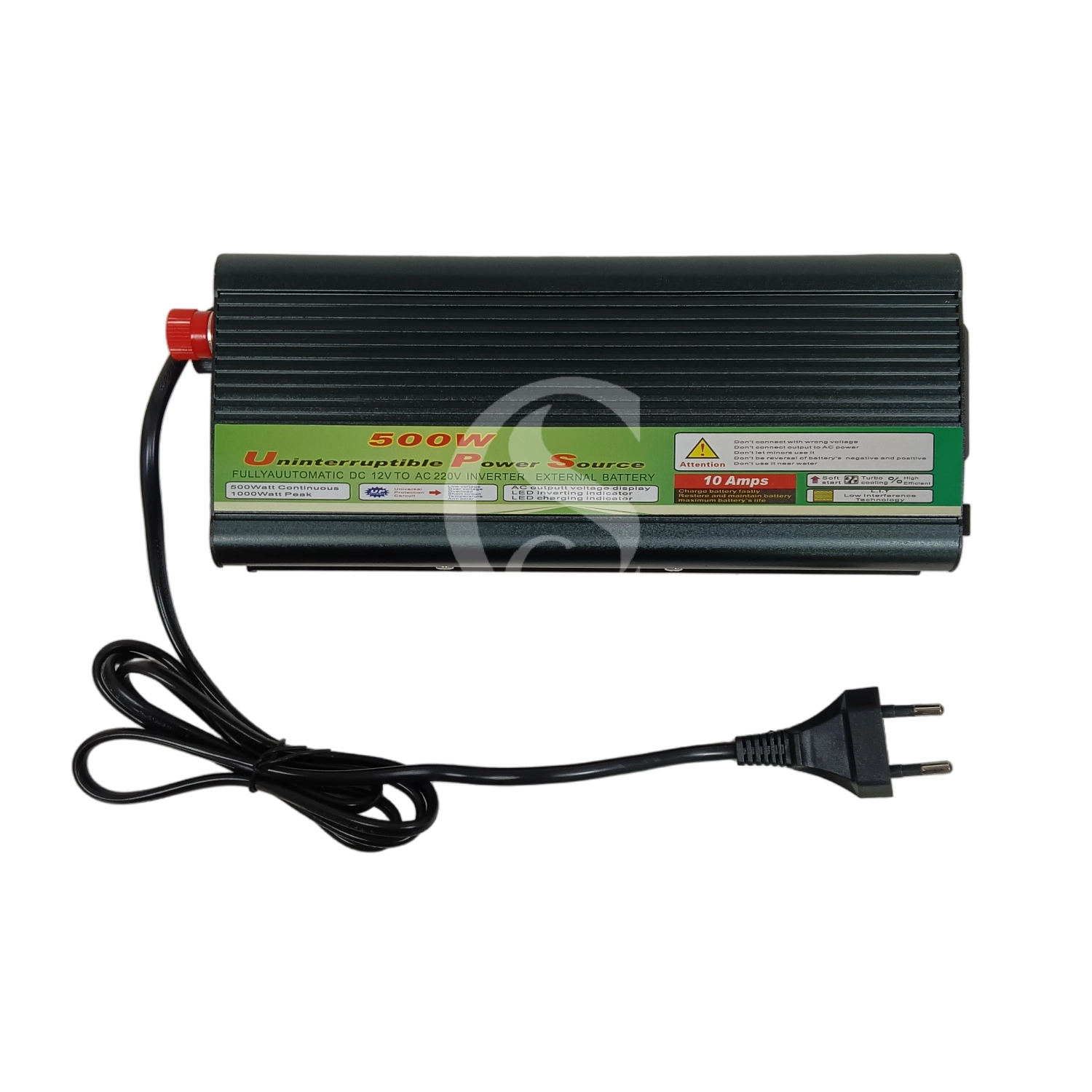
Congsin 500W DC to AC Modified Sine Wave Inverter 12V 220V Off Grid Power Inverter
Congsin 500W 12V to 220V inverter delivers reliable off-grid power with its modified sine wave design. This portable 500W DC to AC power inverter efficiently converts 12V DC to 220V AC, ideal for outdoor and emergency use. Trust Congsin for stable, portable energy solutions.
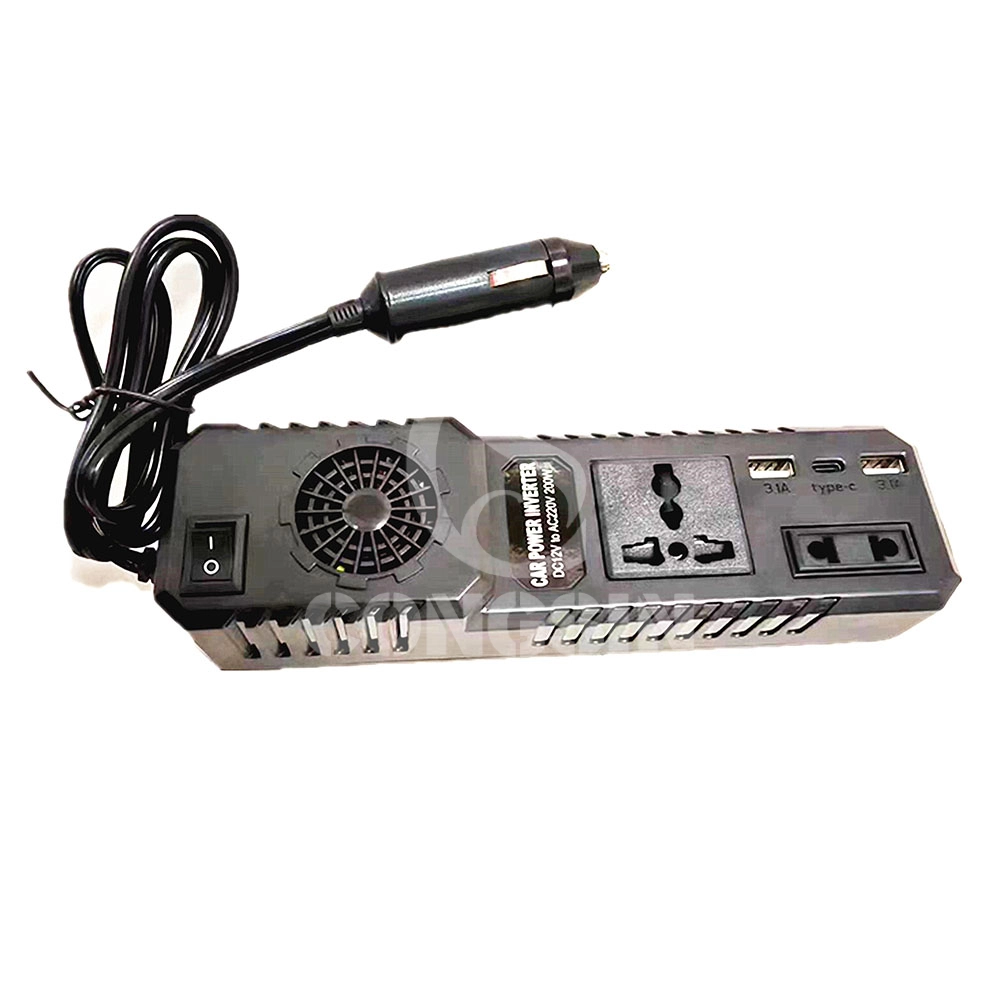
200W Modified Sine Wave Car Power Inverter, Dual Input DC12V/24V to AC220V with Type-C & Dual USB Ports
This 200W Modified Sine Wave Car Power Inverter is a compact and practical power conversion device designed for vehicle use. It supports dual input (DC12V/24V) and outputs AC220V, compatible with various electronic devices. Equipped with a Type-C port and dual 3.1A USB outputs, it can charge laptops, phones, cameras, drones, and other small electronics simultaneously—perfect for outdoor travel, emergency backup, and mobile work scenarios.

CONGSIN is a trusted OEM factory for power inverters, solar charge controllers, and DC converters. Reliable solutions for global B2B buyers.
 High Quality
 7/24 Service
 Guaranteed Warranty
© 2025 Congsin. All Rights Reserved.
 WeChat
 Scan QR Code
sin cong
teaimei10
Whatsapp: +8618028086791
Scan QR Code